
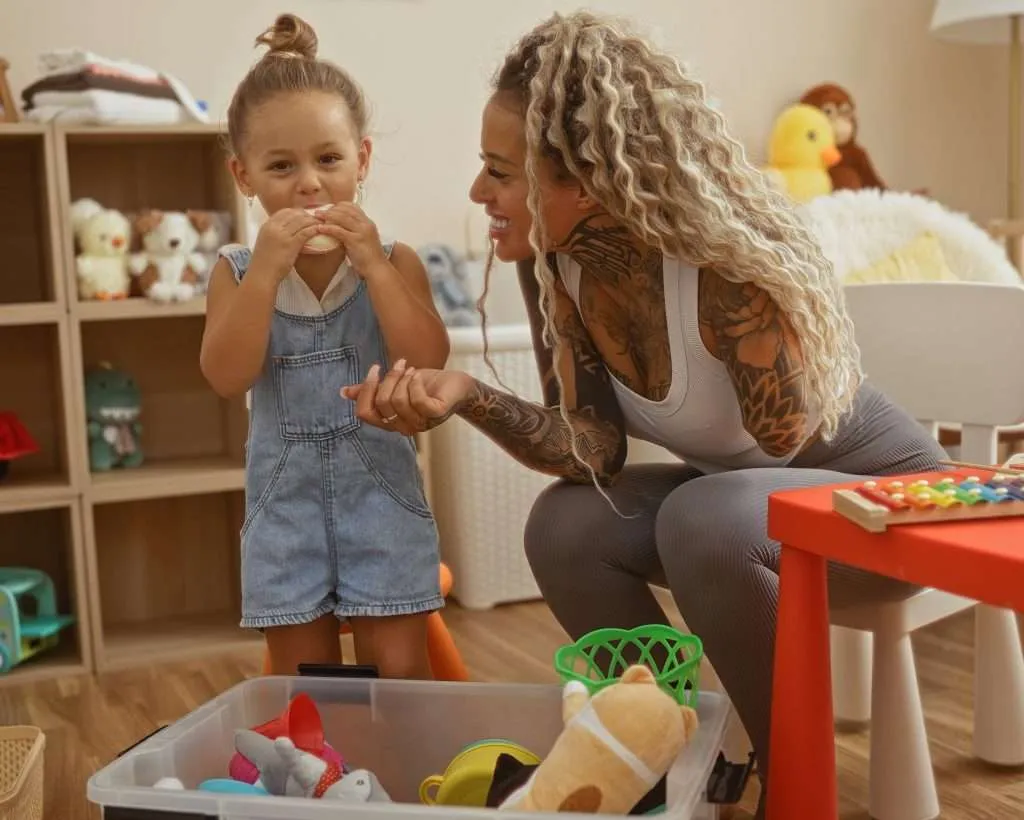
Some seasons of family life feel busier than others. With so much competing for your attention, finding dedicated time to connect with your child may not happen every day. Some days, simply getting everyone where they need to be feels like enough. And it is. We’ve all been there.
The good news is that connection doesn’t have to require extra time or preparation. A favorite toy, song, or snack can become a chance to spend time together while practicing communication, social skills, independence, following directions, and flexibility.
This is an approach often used in Applied Behavior Analysis (ABA) therapy for children with autism. By starting with what a child already loves, learning can become part of activities that bring them joy. And as a parent, there’s something so special about being part of those moments and sharing their excitement.
Throughout this guide, we’ll share simple ways to use your child’s interests to connect, have fun, and build everyday skills.
Why Your Child’s Favorite Activities Are a Great Place to Start
Most of us are more willing to participate when something interests us, and children with autism are no different. What captures your child’s attention might be a favorite game or a particular sound, texture, or color. What matters is that it matters to them.
These interests can become a starting point for practicing new skills. A child who loves toy cars could practice asking for a specific one or taking turns sending them down a ramp.
The skill is the same. The starting point is different.
Finding these opportunities may be easier than you think. Start with something your child enjoys, then look for a simple way to work the skill you want to practice into the activity.
Here are five areas where the things your child loves can open the door to learning:
1. Communication: Create Reasons to Express Themselves
When children are interested in something, they often have more reasons to communicate. They might want another turn, need help, or want to choose what happens next.
Communication can look different for every child. A child with autism might use spoken words, gestures, signs, pictures, or a device. What matters is giving them opportunities to share what they want or need in the way that works best for them. Recognizing and responding to their preferred way of communicating can encourage them to initiate more often.
When your child is engaged with something they love, pause and look for opportunities for them to share a want or need. Give them a moment to respond, offer support if needed, and then keep the activity going.
Try this at home: Look for a moment when your child wants more of something and pause before continuing. If your child loves bubbles, blow a few rounds and then wait to see how they let you know they want more. Respond by starting the bubbles again.
2. Social Skills: Practice Together Through Play
Taking turns, sharing, and playing with another person can feel much more engaging when the activity is something your child likes. Begin with quick turns and gradually make the wait a little longer as the skill becomes more familiar.
You can also practice playing alongside someone else. Let them lead the play while you step into their world. These small interactions can help your child notice and respond to another person and gradually participate together.
Try this at home: Choose a favorite activity that gives you different ways to play together. If your child loves trains, take turns pushing a train around the track, share the track pieces, and each choose a train and play alongside one another. As your child becomes more comfortable, look for more opportunities to interact and play together.
3. Independence: Encourage a Bigger Role in Routines
Building independence often starts with routines your child goes through every day, like getting dressed or brushing their teeth. The key is to start small. Think about getting dressed. What sounds like one task actually involves several steps: choosing clothes, knowing what goes on first, and putting on each item.
Choose one step your child can begin doing more independently. Then bring in something they love to make the routine more interesting or enjoyable for them. Once that step becomes easier, add another. Over time, those small steps can help your child take a bigger role in the routine.
Try this at home: Choose one routine and break it into small steps. Pick one step to practice and pair the routine with something your child loves. If you’re working on getting dressed and your child loves music, play a favorite song while they practice putting on their socks. As that becomes easier, keep the music playing while you add another step, like putting on their shirt. Over time, you can continue adding steps until your child is taking a bigger role in getting dressed.
4. Following Directions: Help Daily Activities Flow More Smoothly
Following directions is part of so many everyday moments, from cleaning up after playtime to sitting down for a meal. Strengthening this skill can help your child participate more fully in daily routines, know what’s expected, and follow through with different tasks.
Practicing during activities your child enjoys can make it easier to capture their attention and give them a reason to participate. Begin with simple, one-step directions and give your child plenty of time to respond. As those become easier, gradually introduce two steps so they can practice listening, remembering, and completing more than one action.
As they become more comfortable, look for opportunities to use the same skill during other parts of their day.
Try this at home: Work a simple direction into something your child enjoys. If they like helping in the kitchen, ask them to “bring me the spoon.” When they’re ready for two steps, try “bring me the spoon, then put the napkin on the table.” Keep it playful and offer help along the way.
5. Flexibility: Practice Small Changes Within Familiar Activities
Things don’t always go exactly as expected. A favorite snack might be unavailable or a routine might happen differently than usual. Building flexibility can help your child adjust to changes more comfortably and try different ways of doing things.
A simple way to practice is to introduce a small change within something your child loves. Because most of the activity stays the same, they can experience something different while still having the comfort of something they know and enjoy. Give them time and support to adjust before trying another change.
Over time, these small experiences can help your child become more comfortable with change in other parts of their day. The goal isn’t to change the things they love, but to gently show them that familiar activities can sometimes look a little different.
Try this at home: Pick one activity your child loves and change just one small part. If your child loves playing with dolls, bring in a new outfit or introduce another doll to the activity. Keep everything else familiar while watching how they respond and offering support as they adjust.
Let Their Interests Lead While Keeping the Fun
Sometimes the best way to build on your child’s interests is to simply watch them first. What do they choose when they get to decide? What makes them come back for more? What gets the biggest laugh?
Then look for moments when one of the five skill areas fits naturally into what they’re doing, while leaving plenty of room for them to simply play and enjoy it. Not every favorite activity needs to become a learning opportunity.
A helpful question to ask yourself is: Am I adding a learning opportunity to something my child enjoys, or am I taking over the activity?
How ABA Uses What Your Child Loves
In ABA therapy, clinicians use what motivates each child to encourage participation and work toward individual goals. As skills develop, they can be practiced across different activities and settings to help children use what they’ve learned in daily life.
At Autism Learning Partners, we want to know what your child loves. Parents and caregivers are an important part of that process because you know what captures their attention better than anyone. Maybe it’s the song you’ve heard 100 times this week or the snack you always keep on hand. Sharing those little details gives their care team more ways to make learning personal.
Our clinicians can bring those interests into ABA therapy as they work toward your child’s goals. And as a parent, there’s no greater joy than seeing your child light up doing something they love.


