
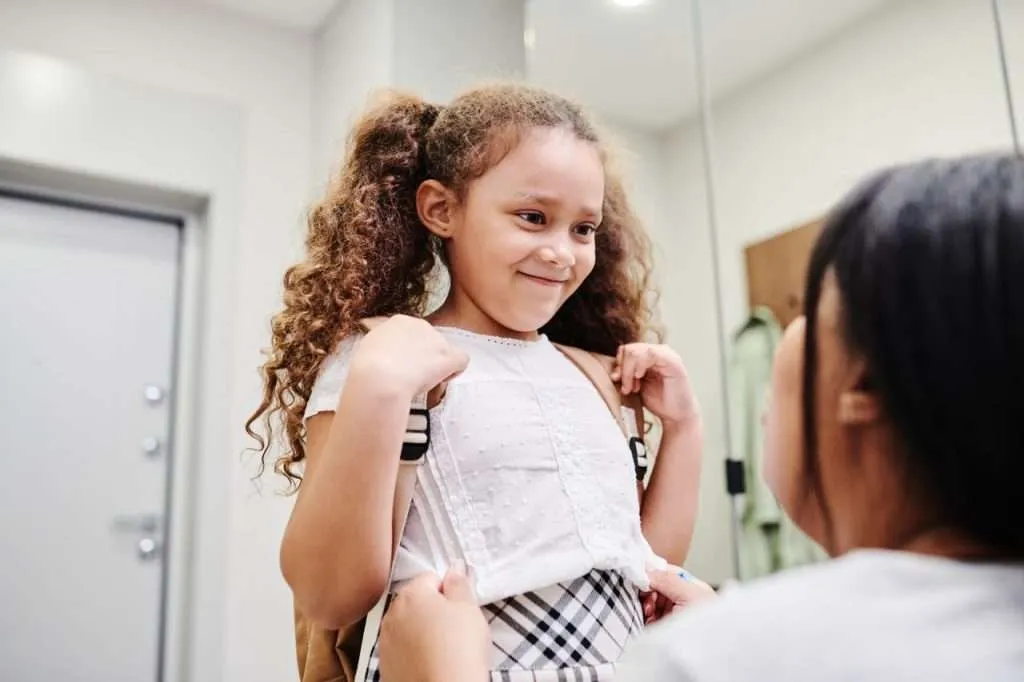
The start of a new school year brings new teachers, classrooms, and routines. For children with autism, those changes can be a lot to take in. One of the best ways to prepare is to set concrete goals tied to the places and moments your child will experience throughout the school day.
This guide walks through goal ideas across five key developmental areas: communication, social skills, daily living, emotional regulation, and academics. To make them easier to apply, the goals are organized by common school settings, including the classroom, cafeteria, hallways, recess, and transitions. If you’re preparing for the new school year, our post on helping your child transition back to school is a good place to start.
Why Set School-Specific Goals?
School-specific goals have a unique advantage because they’re tied to the predictable rhythm of the school day, giving teachers, therapists, and other school staff a shared focus. They also help identify where a child can use a skill independently and where more support is needed.
Communication Goals for the School Day
Communication goals for the classroom often look different from communication goals at home, mostly because school adds more people, noise, and unwritten rules about when and how to speak.
In the classroom:
- Raise a hand or use an agreed-upon signal to request help
- Answer a direct question from the teacher with a verbal response, an AAC device, or a gesture, whichever matches the child’s communication style
On the playground and in the cafeteria:
- Use a greeting phrase with a peer during recess or lunch
- Order or request a food item independently in the lunch line
During transitions and hallway time:
- Follow a two-step verbal or visual direction during transitions, such as “put away your materials, then line up at the door”
- Let a trusted adult know when they need a break or support
Many of these goals build on the same skills covered in our post on learning social skills for children with autism, since communication and social interaction are closely linked, especially in group settings like a classroom.
Social Skills Goals Across School Settings
Social skills at school include the unwritten expectations of classroom life, like waiting your turn or reading a group’s mood.
Classroom and small-group work:
- Participate in a partner or small-group activity
- Offer to share materials, such as crayons or a book
Recess, lunch, and unstructured time:
- Initiate one interaction with a peer per week, whether that’s a question or invitation to play
- Practice entering a group activity already in progress
Assemblies, field trips, and special events:
- Adapt to changes in the daily schedule using a visual schedule or advance notice
- Stay with the group during a less structured outing, such as a field trip
Our post on social skills for children with autism goes deeper into how these skills are built, including how peer-mediated strategies can help skills carry over from a therapy setting into an actual classroom or playground.
Daily Living Skills Goals for School Readiness
Daily living skills help children become more independent throughout the school day by making everyday tasks like unpacking a backpack, opening a lunch container, and following routines easier to manage.
Morning and getting-ready routines:
- Get dressed and pack a backpack with a visual checklist
- Eat breakfast within a set time window before leaving for school
Independence during the school day:
- Use the restroom independently, including handwashing
- Open a lunch container, a juice box, or a snack package independently
After-school routines:
- Unpack a backpack and hand off any school-to-home communication, such as notes or folders
- Begin homework or an activity within an agreed-upon time frame
These goals are often most successful when home and school work from the same plan, making collaboration with your child’s IEP team especially valuable. If you’re new to the process, our post on what an IEP is breaks down how these plans get built and who is involved.
Emotional Regulation Goals for School Success
Because school places many demands on a child’s nervous system, emotional regulation goals help children recognize and manage those challenges before they become overwhelming.
Recognizing and naming emotions:
- Identify a current emotion using a feelings chart, visual scale, or verbal label
- Notice early physical signs of frustration or anxiety, such as a racing heart or clenched fists
Coping strategies for the classroom:
- Use a calm-down corner, sensory tool, or breathing strategy when feeling overwhelmed
- Request a break using an agreed-upon signal
Managing transitions and changes in routine:
- Adjust to an unexpected schedule change, such as a substitute teacher or a fire drill
- Recover from a disappointing outcome, like losing a game at recess, using a practiced coping strategy
The CDC’s overview of children’s mental health points out that learning to cope with challenges and reach emotional milestones is a normal part of childhood development for every child, autistic or not.
Academic and Learning Goals
Academic goals for students with autism often work best when they’re broken into the smaller building blocks that make learning possible.
Building focus and on-task behavior:
- Stay engaged with a task for a set amount of time, gradually increasing that window over time
- Return attention to the teacher or task after a distraction
Organization and executive functioning:
- Use a visual schedule, planner, or checklist to track assignments and due dates
- Gather needed materials, such as a pencil or worksheet before an activity begins
Partnering with teachers on learning goals:
- Complete and turn in homework consistently, with a system for remembering it exists
- Ask for help or clarification on an academic task
If your family is heading into the school year still weighing whether a formal evaluation makes sense, it’s worth reading our post on getting an autism evaluation before the school year begins. Academic goals, along with everything else in this guide, tend to be easier to set and track once a child’s learning profile is better understood.
Tips for Setting Goals That Actually Stick
- Keep goals specific and observable. “Communicate better” isn’t measurable. “Ask a peer to play at recess twice a week” is.
- Involve your child. Children are more motivated by goals that connect to something they care about, such as a favorite subject or friend group.
- Loop in the whole team. Teachers, aides, therapists, and family members should all know the current goals so the same strategies and language get used.
- Track progress visibly. A simple chart or checklist helps everyone see what’s working and adjust what isn’t.
- Expect goals to evolve. A goal that made sense in September may need adjusting by November. That’s a sign of progress, not failure.
Bringing School and Home Together
When possible, share these goals with your child’s teacher and ABA team so everyone can reinforce the same skills. A consistent approach gives your child more opportunities to practice those skills across settings and use them throughout the school day.
For families who are earlier in the process, our guide to what happens during an ABA assessment explains how a treatment team identifies these types of goals, and our glossary of common autism and ABA terms is a handy reference if any of the language in an IEP meeting or therapy report feels unfamiliar.
How Autism Learning Partners Can Help
At Autism Learning Partners, our clinical teams work closely with families and schools to set goals that support children throughout the school day, not just in therapy. Whether your child is working on communication, social skills, daily living, emotional regulation, or academics, we focus on helping them build skills they can use throughout everyday life .
As you head into the new school year, we’re here to help your family turn these goals into a plan. Reach out to our team to talk through what a strong start to the school year could look like for your child.


